


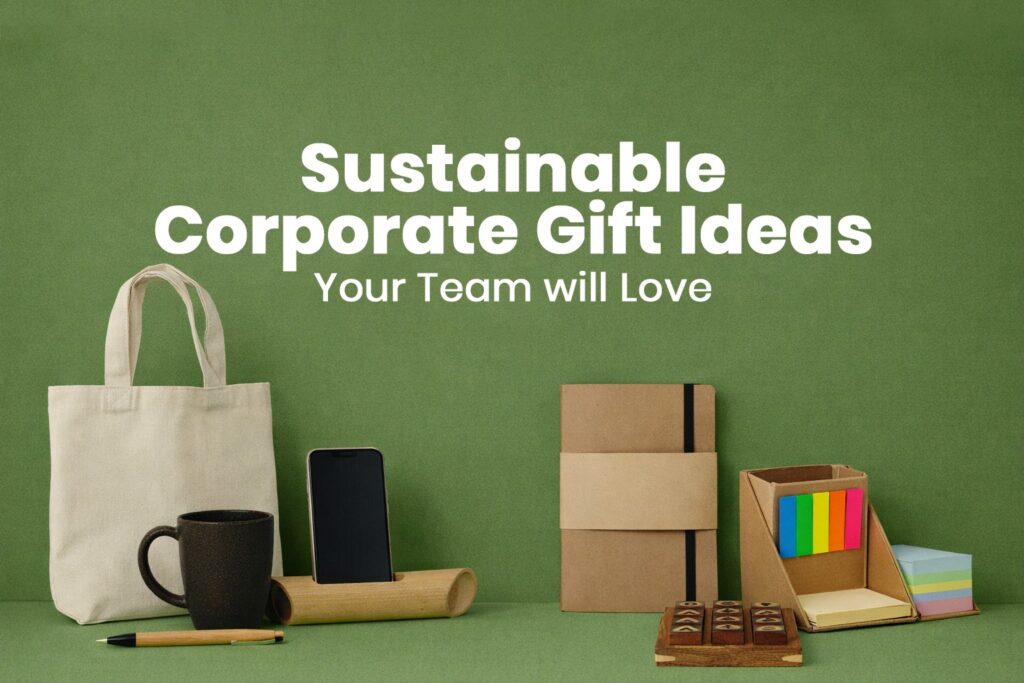
Sustainable corporate gifting did not become important overnight.
It entered organisations gradually. First as a compliance requirement. Then as an ESG conversation. Today, it shows up in a much simpler way through how employees experience the gift itself.
Employees are not evaluating supply chains or certifications.
They are noticing whether a gift feels careless or considered.
Perfection is not expected.
Intention is.
A sustainable gift that is useful, durable, and thoughtfully presented builds far more credibility than an eco-labelled product that goes unused. Where most organisations struggle is not intent, but execution.
Sustainability fails when it feels performative
The fastest way to weaken a sustainability effort is to make it loud.
Across large gifting programs, employees quickly recognize when sustainability is used as messaging rather than design. Over-explained packaging, novelty eco-products, or items that sacrifice quality for symbolism rarely land well.
What consistently works is quieter.
Products that replace something disposable.
Items that last beyond a few months.
Gifts that do not require explanation to justify their presence.
When sustainability blends into everyday use, it stops feeling like a campaign and starts feeling normal.
Reusable drinkware aligns with real behaviour
Reusable bottles and tumblers remain among the most effective sustainable corporate gifts. Not because they are innovative, but because they align with existing habits.
People already carry bottles.
They already drink coffee.
They already move between home, office, and commute.
A well-designed stainless steel bottle or insulated tumbler fits naturally into this routine. When it is sturdy, neutral, and easy to maintain, it stays in use. When it feels gimmicky, it disappears.
Material specifications matter less than usability.
Desk essentials signal restraint and professionalism
Desk gifting often goes unnoticed when done poorly, and quietly appreciated when done well.
Recycled notebooks, bamboo pens, or simple wooden desk accessories perform consistently because they do not compete for attention. They sit on desks, get used gradually, and age naturally.
The strongest sustainable desk items do not announce sustainability.
They simply avoid waste.
When quality is prioritised, employees stop categorising them as eco products and start seeing them as good products.
Onboarding kits shape early expectations
Early experiences establish baseline perceptions.
Sustainable onboarding kits work because they communicate coherence. A reusable bag, a durable bottle, and a clean notebook, packaged with restraint, signal that the organisation thinks beyond the moment.
Overloaded kits feel unfocused.
Minimal kits feel intentional.
New employees register this difference immediately, even if it is never explicitly discussed.
Plants work when they respect the workspace
Plants remain popular, but they are also easy to misjudge.
Low-maintenance desk plants or simple seed kits perform best. They add warmth without becoming an obligation. Overly decorative or high-maintenance options are often abandoned.
The objective is not to decorate desks.
It is to introduce something living without adding friction.
That balance determines whether the gift is appreciated or ignored.
Sustainable wellness gifting depends on timing
Wellness gifts succeed when they respond to context.
After demanding quarters.
During intensive project cycles.
At moments when teams feel stretched.
Organic teas, natural personal care items, or reusable wellness accessories feel supportive when they align with a real moment. When distributed without context, they feel generic.
Here, sustainability is secondary to empathy.
That is precisely why it works.
Recycled products must stand on their own
Upcycled and recycled gifts often come with strong stories. Stories alone are not enough.
If a recycled fabric bag or notebook feels flimsy, the sustainability message collapses. When it feels solid and well-finished, the story becomes an added layer rather than a justification.
Employees do not keep gifts because they are recycled.
They keep them because they are good.
That distinction defines whether sustainability feels credible or cosmetic.
Packaging reveals intent immediately
Packaging is often the first indicator of how seriously sustainability is taken.
Minimal printing, recyclable boxes, and reusable cloth packaging are noticed instantly. Interestingly, simpler packaging often feels more premium because it avoids excess.
Excess was once used to signal effort.
Today, it signals waste.
That shift has already occurred.
Choice-based gifting reduces waste and friction
One of the most practical sustainability decisions organisations make is allowing choice.
Not every employee wants the same product, even if it is eco-friendly. Choice-based gifting reduces duplication, avoids unused inventory, and respects individual preferences.
From an employee perspective, choice signals trust.
From a sustainability perspective, it prevents unnecessary consumption.
Both outcomes matter.
Digital rewards are sometimes the most responsible option
Physical gifts are not always the right answer.
For distributed teams, global workforces, or frequent recognition programs, digital rewards remove packaging, shipping, and inventory complexity entirely.
When positioned as flexibility rather than convenience, digital gifting feels modern and considerate rather than impersonal.
Sustainability is not about forcing physical products into every moment.
Making sustainable gifting work at scale
Good intent often breaks down as programs grow.
Without structure, even well-chosen gifts suffer from inconsistent quality, delayed deliveries, and operational friction. This is where many sustainability efforts quietly fail.
Structured platforms such as BrandSTIK, supported by FOXBOX Rewards, enable organisations to maintain consistency while offering eco-friendly collections, choice-based gifting, digital rewards, and responsible fulfillment.
The value is not automation itself.
It is reliability.
Reliability sustains trust over time.
Conclusion
Sustainable corporate gifting succeeds by being appropriate, not impressive.
When gifts are useful, well-timed, and quietly responsible, they reinforce culture without explanation. Over time, this consistency shapes how employees experience the organisation far more than any sustainability slogan ever could.
That is when sustainable gifting stops being a program and becomes part of how the organisation operates.
Call to Action
If sustainable gifting feels harder to execute as programs scale, the challenge is rarely product selection. It is usually the lack of structure behind it.
BrandSTIK helps organisations design and manage sustainable gifting programs that balance responsibility, consistency, and employee experience at scale.
📞 +91 9594070940
✉ info@brandstik.com
🌐 www.brandstik.com