

Eco-friendly corporate gifting has shifted from a symbolic gesture to an operational expectation.
Across enterprise gifting programs, sustainability is now evaluated through outcomes, not intent. Materials, packaging, and product relevance are scrutinized because they directly affect waste, cost efficiency, and long-term brand perception.
The most effective sustainable gifting strategies share one trait: they prioritise usability at scale. Gifts that integrate into daily work and life consistently outperform those designed only to signal environmental awareness.
The following categories reflect what has proven to work across large, distributed gifting programs.
Why Sustainable Corporate Gifting Matters at Scale
In high-volume corporate gifting, small decisions multiply quickly.
A single material choice, repeated across thousands of recipients, determines whether a program reduces waste or adds to it. The same applies to packaging, durability, and product relevance.
Well-structured sustainable gifting programs consistently achieve three outcomes:
- Lower discard rates compared to novelty gifting
- Stronger alignment between ESG goals and employee experience
- Improved perception of brand responsibility without additional communication
Sustainability delivers impact only when it is practical.
The Core Principle: Utility Drives Sustainability
Across multiple gifting programs, a consistent pattern emerges:
Items that are not used within the first few weeks rarely contribute to sustainability outcomes.
High-performing programs focus on products that become part of everyday routines rather than momentary experiences. This principle informs the categories below.
7 Sustainable Corporate Gift Ideas That Deliver Real Impact
1. Reusable Drinkware with Everyday Relevance
Reusable bottles and cups remain one of the most retained sustainable gifts.
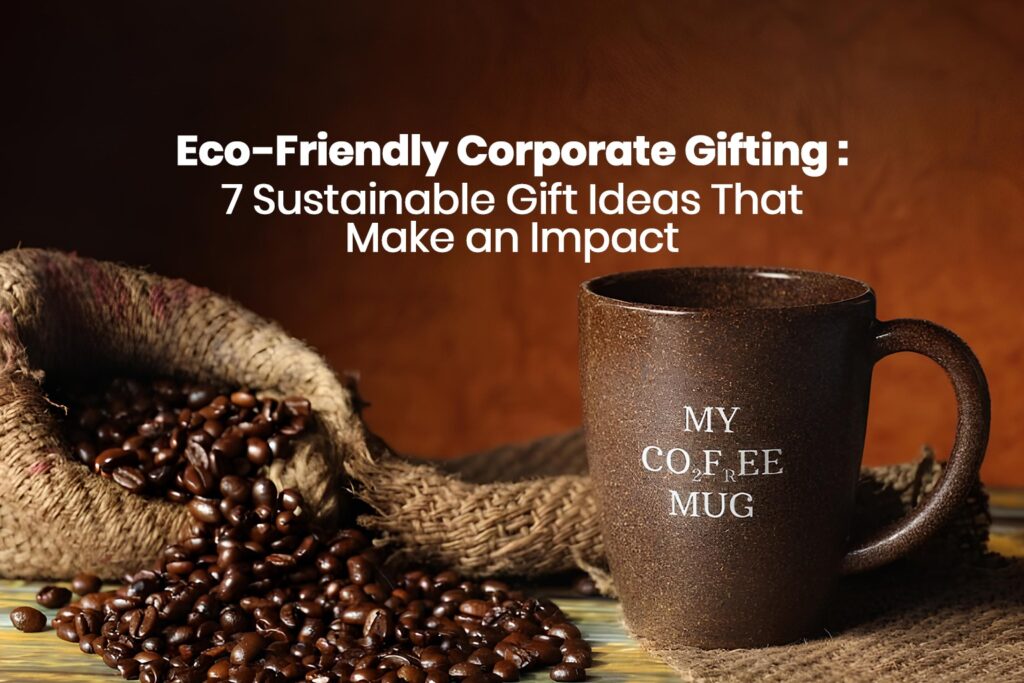
When designed with durable materials such as stainless steel or bamboo, they replace single-use plastics and maintain long-term visibility without excessive branding. Their success is driven by frequency of use, not novelty.
2. Eco-Friendly Stationery That Supports Daily Work
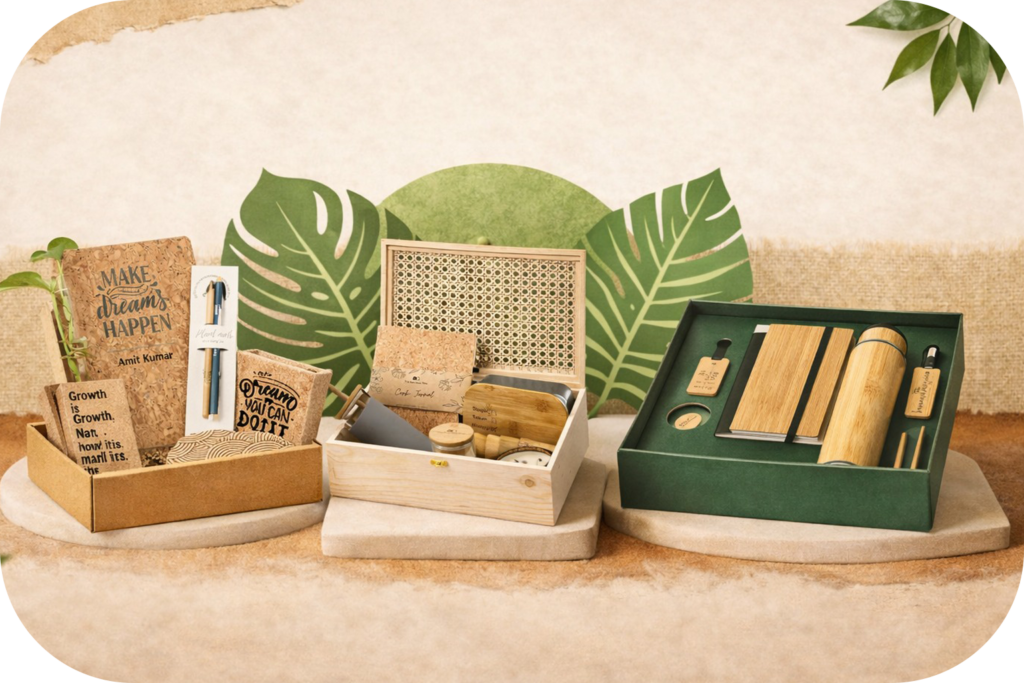
Recycled paper notebooks, seed paper products, and bamboo pens continue to perform reliably across roles and functions.
These items support onboarding, meetings, and task management, making them immediately useful. Minimal branding ensures they feel personal rather than promotional.
3. Sustainable Desk Accessories
Desk accessories made from cork, wood, or recycled materials integrate easily into professional environments.
They add functional value without visual clutter and remain in use longer than decorative items. Simplicity and neutral design are key to retention.
4. Plant-Based and Grow-Your-Own Gifts
Plant kits and seed-based gifts introduce sustainability into everyday behaviour rather than limiting it to messaging.
They perform well when logistics and delivery timelines are planned carefully. Engagement is driven by interaction, not packaging.
5. Organic and Responsibly Sourced Wellness Products
Wellness gifting continues to shift toward products with cleaner ingredients and minimal packaging.
Items that support personal well-being while aligning with responsible sourcing standards signal care without appearing performative. Transparency matters more than variety.
6. Sustainable Bags and Functional Accessories
Tote bags, laptop sleeves, and pouches made from recycled or natural fabrics remain high-usage items.
Their effectiveness comes from utility beyond the workplace. Neutral design and restrained branding increase the likelihood of continued use.
7. Digital Rewards and Experiences
Digital gifting has become a core component of sustainable strategies.
By removing physical production and shipping, digital rewards significantly reduce environmental impact while improving flexibility. They are particularly effective for remote and multi-location teams.
Digital options are no longer supplementary. They are foundational.
Branding Without Undermining Sustainability
Across sustainable gifting programs, heavy branding consistently reduces product lifespan.
Subtle techniques such as laser engraving, tone-on-tone marks, or discreet packaging maintain brand presence without compromising usability. Sustainability works best when branding supports the product rather than dominating it.
Selecting Sustainable Gifts That Scale
Effective eco-friendly gifting decisions are guided by four criteria:
- Durability and repeat use
- Minimal and recyclable packaging
- Ethical sourcing and production
- Full lifecycle impact rather than surface-level materials
At scale, practicality always outperforms symbolism.
Conclusion: Sustainability Works When It Is Designed Into the System
Eco-friendly corporate gifting is no longer about differentiation.
It reflects how organisations translate values into repeatable decisions. Programs that focus on utility, restraint, and relevance consistently outperform those built around messaging alone.
When sustainability is embedded into the gifting system rather than layered on top, corporate gifting delivers long-term value for people, brands, and the environment.