The first impression of an organisation is rarely formed in a meeting.
It happens earlier than that.
Usually on day one. Sometimes, even before the first login works.
It shows up in small moments. Opening a box at a desk. Unwrapping something that feels considered. Realizing that someone planned ahead. Long before systems access or role clarity, new employees begin forming opinions about how the organisation operates.
Across onboarding programs observed at scale, one thing is consistent. Welcome kits that feel intentional quietly build confidence. The ones that feel rushed or symbolic do the opposite.
This is not about gifting.
It is about signals.
What you include in a welcome kit, and just as importantly, what you leave out, tells a new employee how seriously their arrival is taken.
Why Employee Welcome Kits Matter More Than We Admit
Onboarding today looks very different from what it did a few years ago.
Teams are hybrid. Offices are quieter. New hires are expected to contribute faster, often without the informal support systems that once existed. In this environment, clarity and reassurance matter more than excitement.
A good welcome kit does not try to impress.
It tries to steady.
At scale, welcome kits quietly serve three purposes:
They reduce first-week friction when everything feels unfamiliar
They communicate care without needing a formal conversation
They create consistency across teams, roles, and locations
When these objectives are not met, welcome kits become noise rather than support.
The Rule Most Teams Learn the Hard Way: Utility Over Volume
There is a pattern that appears repeatedly.
If an item is not used within the first five working days, it rarely becomes part of someone’s routine.
This is why high performing welcome kits often look simpler than expected. They do not try to include everything. They include what will actually be used while someone is still settling in.
Volume feels generous in theory.
Utility feels thoughtful in practice.
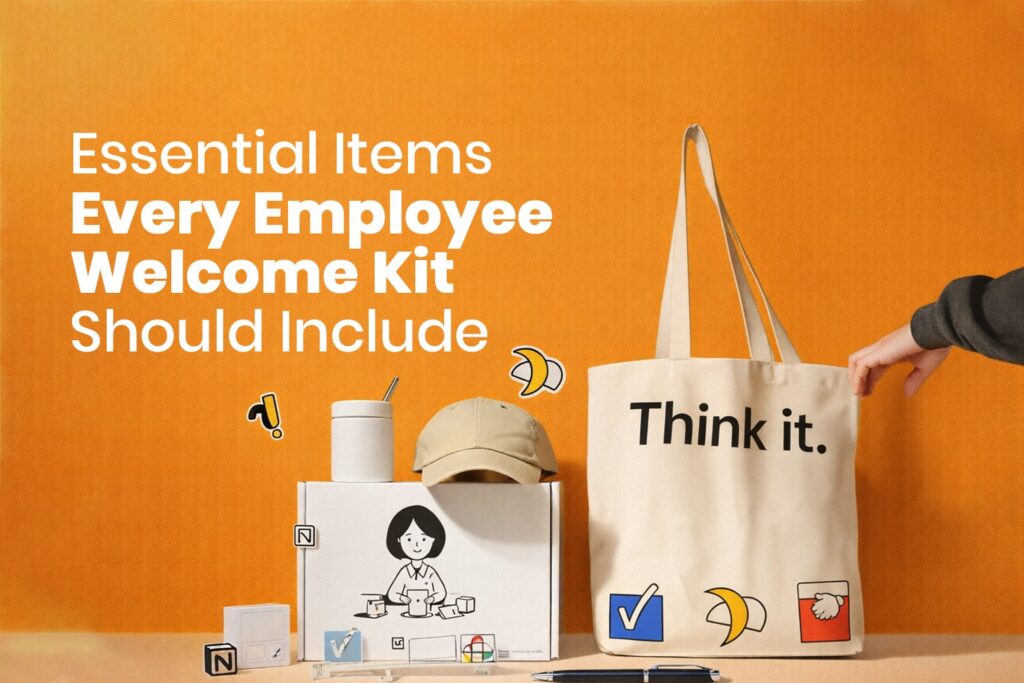
Essential Items Every Employee Welcome Kit Should Include
1. A Personalised Work Diary or Notebook
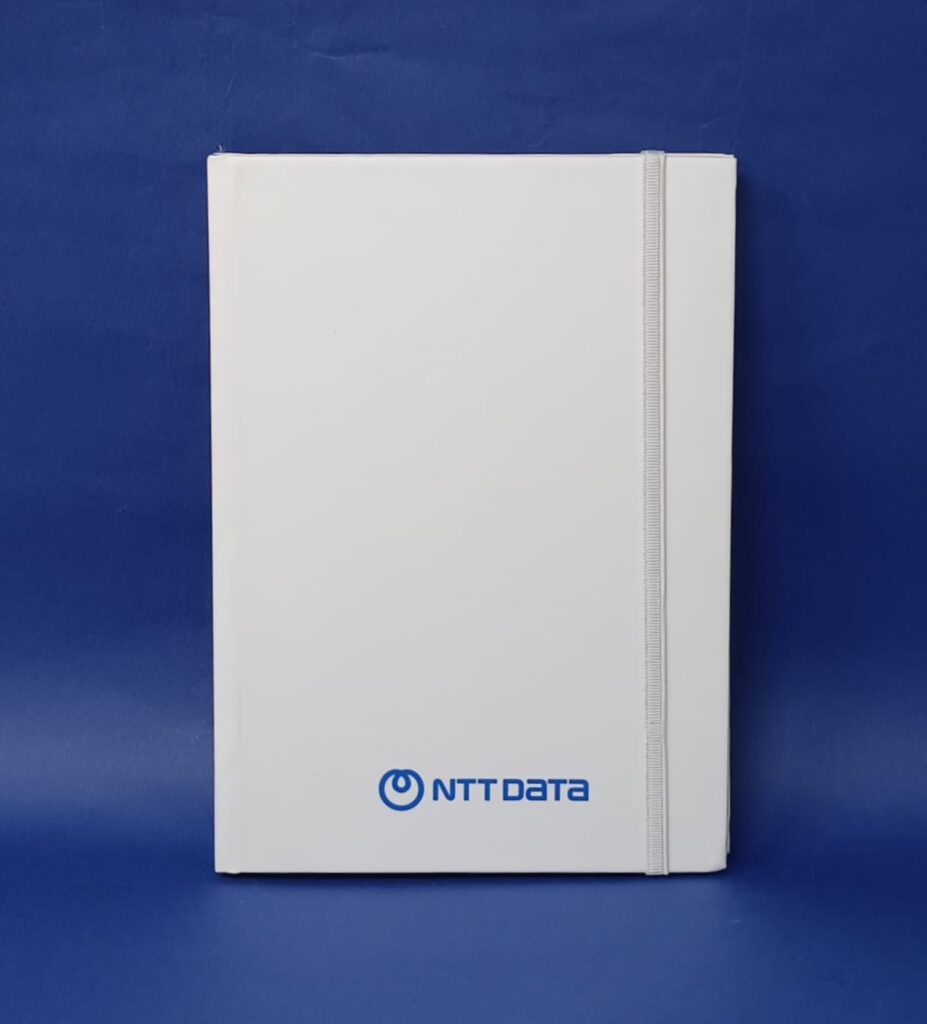
This is one of the most consistently used items in onboarding.
The first few weeks of a new role involve constant note taking. Processes, names, acronyms, reminders, questions. A good notebook becomes a quiet anchor during this phase.
When personalised with the employee’s name and kept free of heavy branding, it stops feeling like merchandise and starts feeling personal.
That sense of ownership matters more than most teams realize.
2. A Premium Branded Pen
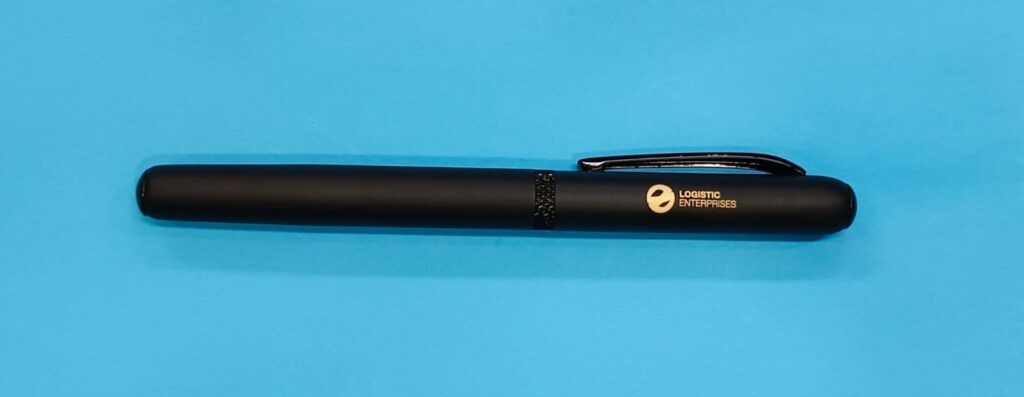
Pens are easy to overlook, but they should not be.
A lightweight plastic pen disappears quickly. A well made metal pen stays because it feels deliberate. Employees carry it into meetings, keep it on their desk, and continue using it without thinking about branding.
The difference is not visibility.
It is familiarity.
3. A Reusable Water Bottle
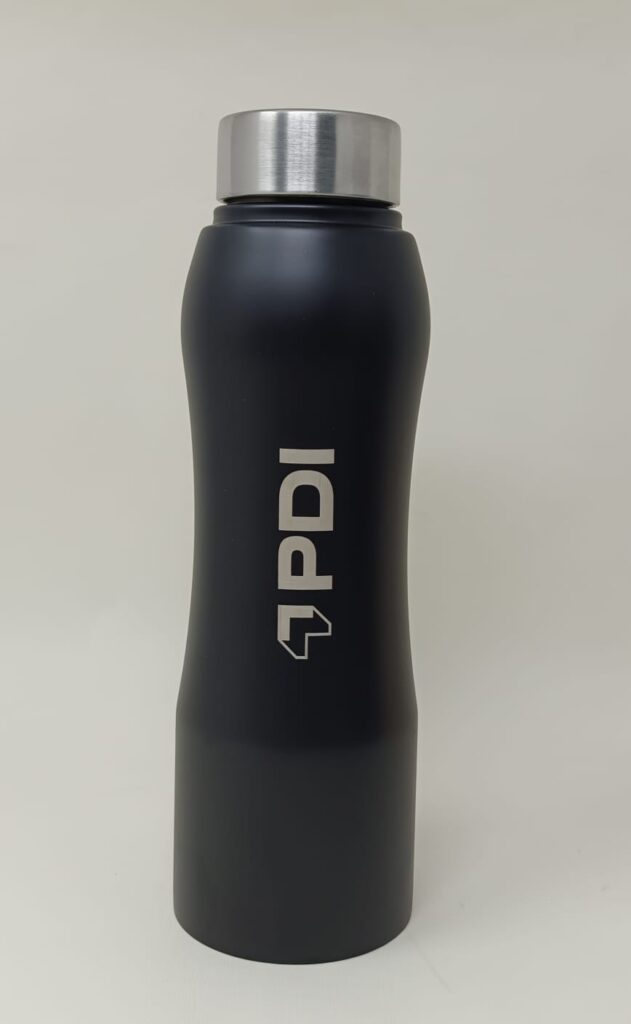
Water bottles consistently rank among the most retained welcome kit items.
When designed with clean aesthetics and durable materials, they fit naturally into daily routines. They support wellbeing without needing explanation and reflect sustainability without appearing performative.
Personalisation increases retention even further, but only when branding remains subtle.
4. A Desk Mug
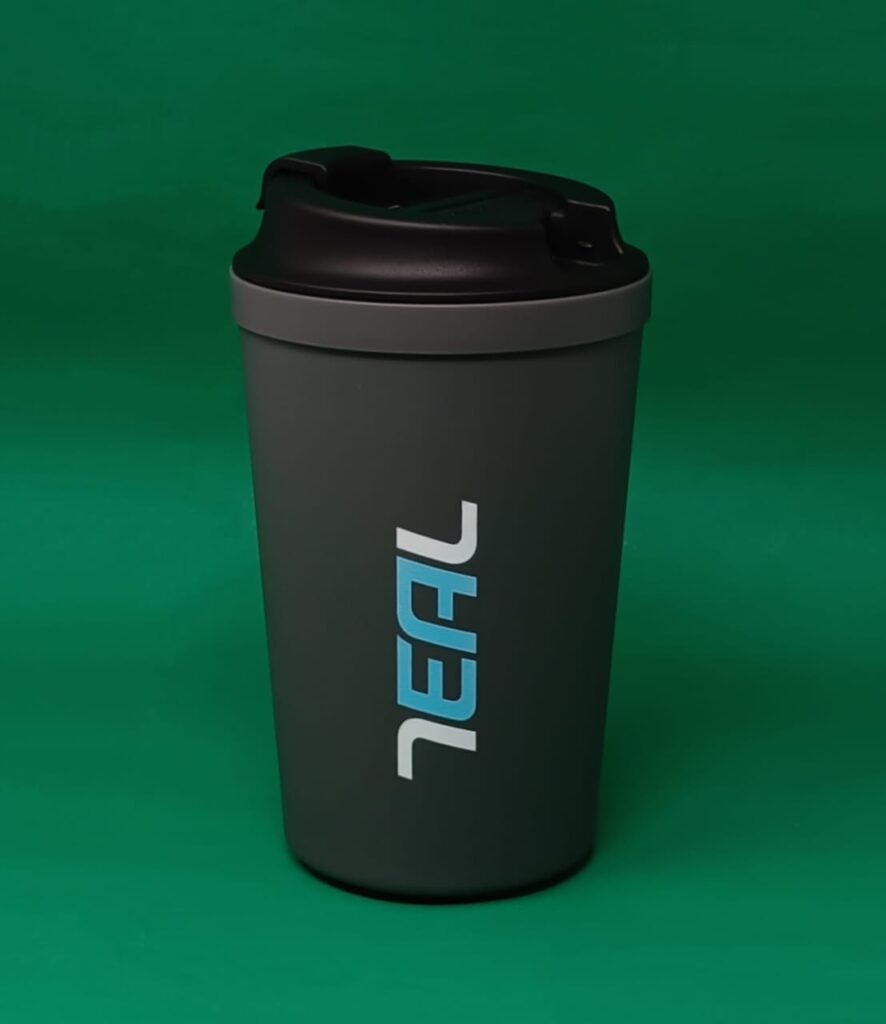
Mugs play a quieter role in workplace integration.
They quickly become part of an employee’s daily rhythm and help establish a sense of personal space in shared environments. Neutral designs with minimal branding tend to stay in use far longer than loud, logo heavy versions.
Their value comes from familiarity, not novelty.
5. A Functional Work Bag
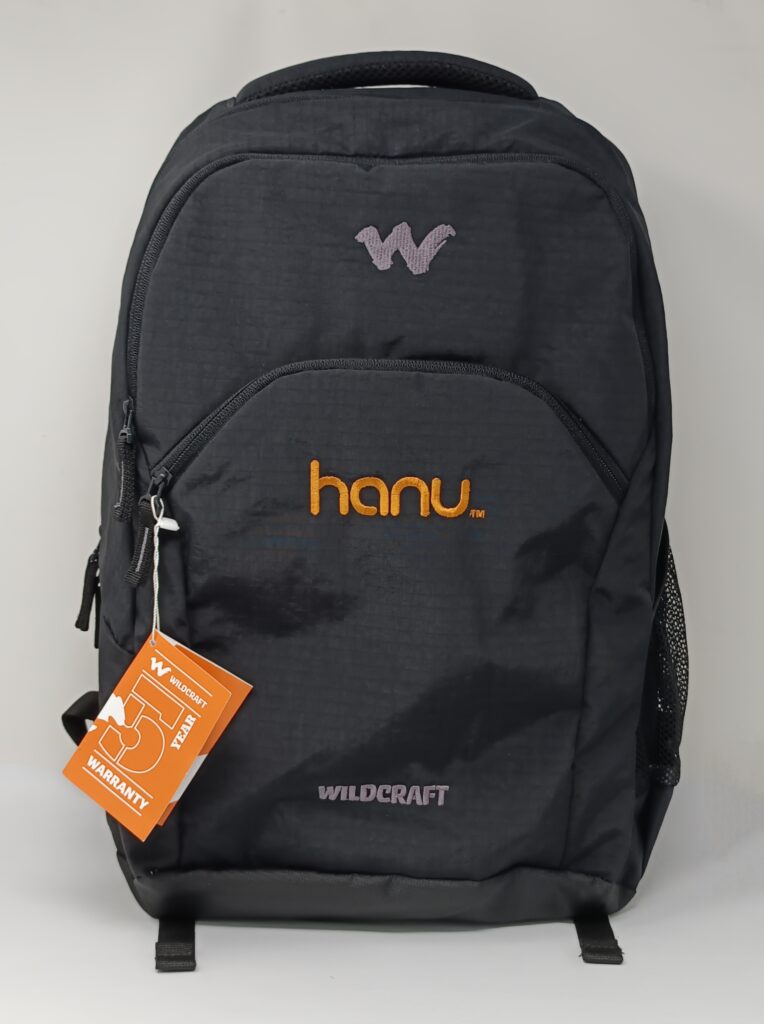
Bags are high-impact items when chosen well.
The bags that perform best are simple and practical. Neutral colours. Comfortable straps. Thoughtful compartments. Nothing overly styled or trend-driven.
When an employee chooses to use a branded bag outside work hours, it signals trust in the product, not loyalty to the logo.
Why Personalisation Is Now a Baseline Expectation
Personalisation has shifted from being a differentiator to an expectation.
Using employee names instead of logo-dominant branding consistently improves retention, reduces waste, and increases perceived relevance. Items that feel personal are kept. Items that feel promotional are filtered out.
At scale, this approach also improves operational efficiency by reducing unused inventory and unnecessary replacements.
Welcome Kits Work Best as Part of the Onboarding System
The most effective organisations do not treat welcome kits as a one-time activity.
They treat them as part of the onboarding experience.
That means the kit supports the first 30 days, not just day one.
The experience remains consistent across roles and regions.
Design choices reflect culture without spelling it out.
When welcome kits are designed this way, they require no explanation. They simply work.
Final Thought
Welcome kits are often underestimated because they are quiet.
They do not demand attention or explanation. Yet when designed intentionally, they influence early perception, confidence, and engagement in measurable ways.
The most effective welcome kits focus on essentials, prioritize usability, and communicate intent through restraint rather than messaging.
In onboarding, consistency builds trust.
And trust accelerates performance.
Call to Action
If onboarding is being treated as an experience rather than a checklist, welcome kits deserve the same level of thought.
BrandSTIK helps organisations design employee welcome kits that are practical, personal, and scalable. From essential first curation and subtle personalisation to sustainable options and dependable fulfillment, the focus stays on what employees actually use.
If your goal is to make onboarding feel considered from day one, the right structure makes all the difference.
Connect with us today
📞 Call: +91 9594070940
📧 Email: info@brandstik.com
🌐 Visit: www.brandstik.com