
Most organisations acknowledge service milestones.
Fewer design them with intention.
Across enterprise environments, long-term recognition often becomes procedural. A name is announced. A certificate is handed over. A photograph is taken. The moment passes.
The intention is appreciation. The execution feels routine.
When recognition is treated as a strategic signal rather than a calendar event, the impact changes.
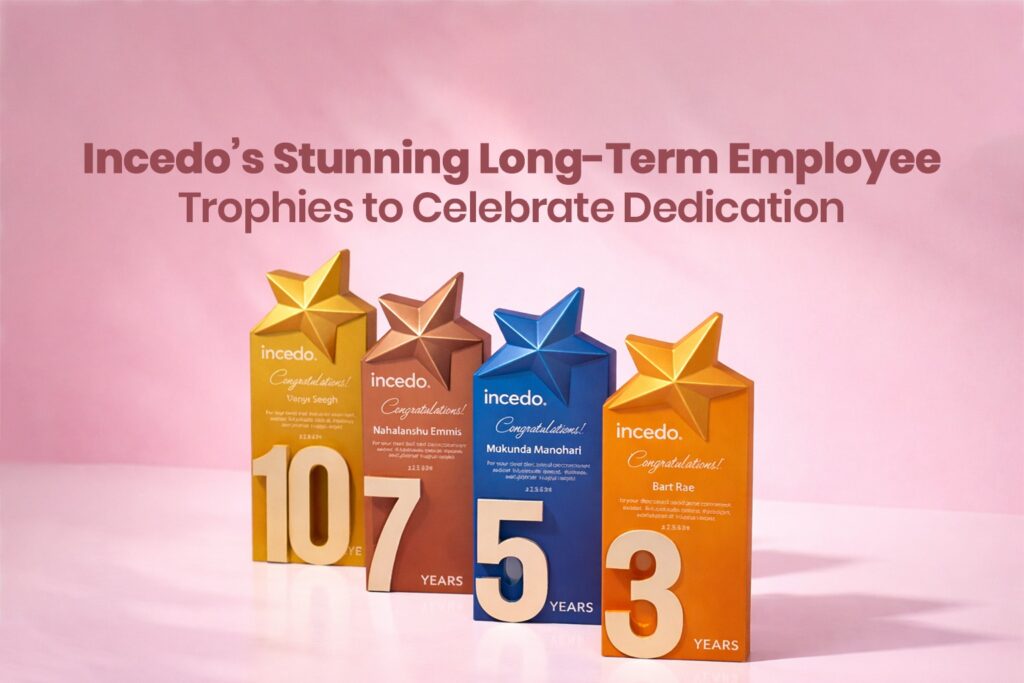
That shift is visible in Incedo’s approach to long-term employee trophies.
Why Long-Term Employee Recognition Still Matters
In high-growth organisations, performance is measured quarterly. Targets move fast. Teams evolve.
Tenure, however, represents something different.
It reflects sustained contribution through multiple cycles. It reflects alignment during change. It reflects loyalty when options are available elsewhere.
Recognising long-term service sends a clear message.
Commitment is noticed.
Consistency is valued.
Stability matters.
Without structured recognition, that message becomes diluted.
Designing Milestones That Reflect Real Career Phases
Service milestones are most meaningful when they represent progression, not just time.
Incedo structured its recognition program around four stages:
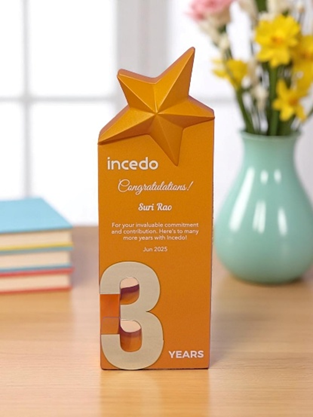
3 Years of Service
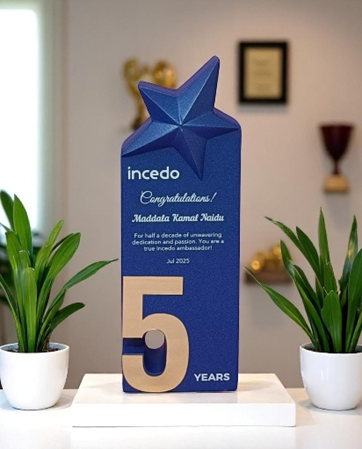
5 Years of Service
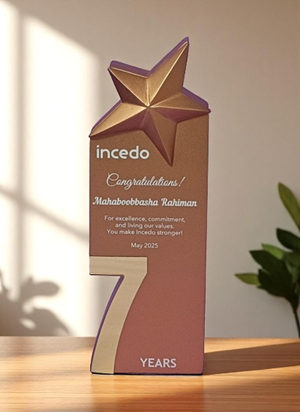
7 Years of Service
10 Years of Service
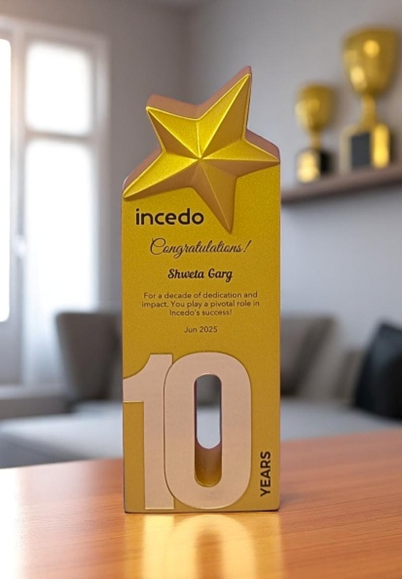
Each stage reflects a different level of integration and impact.
Three years signals full integration into the organisation’s systems and culture.
Five years reflects reliability and consistent contribution.
Seven years often signals leadership maturity and influence.
Ten years represents institutional knowledge and long-term trust.
When milestones are differentiated clearly, recognition feels earned rather than automatic.
Why Tangible Awards Create Stronger Recall
Recognition can be verbal. It can be digital. It can be transactional.
Tangible recognition operates differently.
A well-crafted trophy does not disappear after the event. It remains visible.
On a desk.
On a shelf.
In a meeting room.
That visibility reinforces memory.
Across employee engagement programs, physical awards consistently create deeper emotional attachment than symbolic acknowledgments alone.
The material presence signals seriousness.
Design as a Cultural Reflection
An employee trophy is not just an award. It communicates how the organisation sees itself.
Incedo’s long-term employee trophies were designed with clean lines, refined finishes and clear brand integration. Not overly decorative. Not generic.
The design mirrors organisational clarity.
When recognition aligns visually with brand identity, it reinforces consistency. Employees see the same values reflected in performance expectations and in appreciation moments.
That alignment strengthens trust.
Recognition as a Retention Signal
Retention is rarely influenced by a single moment.
It is influenced by accumulated signals.
Structured long-term recognition tells employees that tenure is not invisible. It reinforces that sustained effort has weight.
In competitive talent markets, that signal carries importance.
Recognition programs that operate predictably and visibly reduce the perception that loyalty goes unnoticed.
A Broader Perspective
Long-term employee recognition is not about rewarding the past.
It is about reinforcing continuity.
When milestone awards are thoughtfully designed and consistently delivered, they shape culture quietly. They create aspiration for newer employees and pride for long-standing ones.
Recognition becomes part of organisational identity rather than a yearly ritual.
Final Thought
Service milestones should not feel administrative.
They should feel meaningful.
Incedo’s long-term employee trophies represent more than years completed. They represent sustained trust between the organisation and its people.
And sustained trust is the foundation of durable growth.